Visions of Mother

In my early forties, an amazing thing happened. I began meditating daily, at first in my bedroom closet so as not to awaken my husband, and later in a small room he built for me in the garage. In those precious moments of meditation, I let go of fears and other distractions and rested gently in the breath. Visions appeared, fragrant from another realm: oceans and forest streams with eddying pools where four-legged animals gathered to drink.
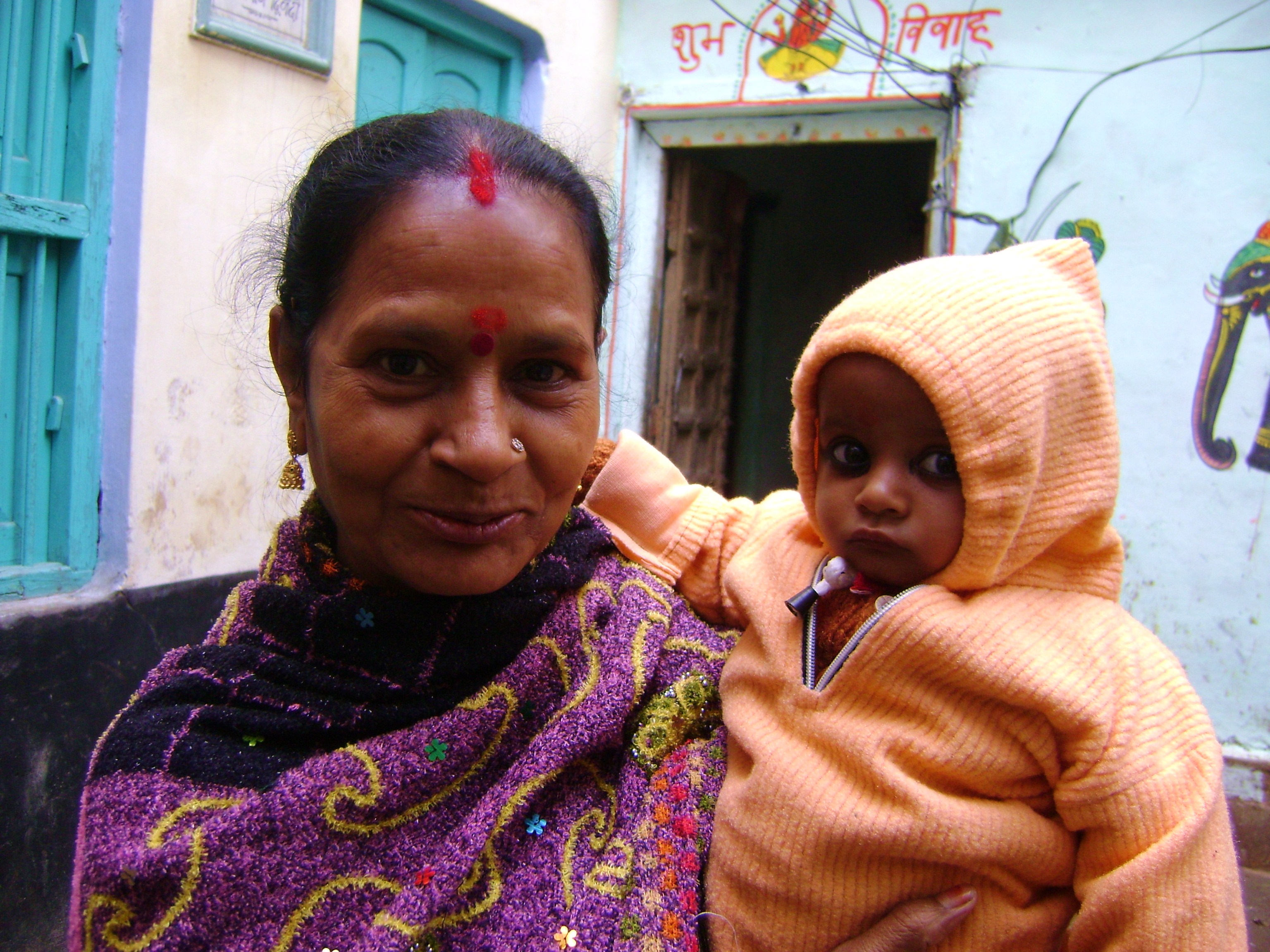
Indian madonna and child, Annabel Landaverde

During that period, as my body shifted towards change, towards menopause, my inner spirit opened itself to the larger Spirit, and I came face to face with the Mother. Scenes unfurled on my inner eye in undulating landscapes, and She stepped into them. A tall African woman, the Mother was someone my heart recognized instantly. There were others, including Joan of Arc, armored and mounted on her horse, and several indigenous images of Mother.

In the visions the Mother cared for me, providing me nourishment, clothing, walking sticks, and gemstone necklaces that spoke to me of my inestimable worth in Her eyes. These waking visions were reinforced by dreams and gave rise to my desire to know other women’s stories and to hear their experiences of the Divine. After interviewing nearly fifty women of different faiths, I realized that however we name Spirit, we receive it with deep-hearted openness. Like Mary, our lives are the surprise that begins with the response, “Let it be.”

Taking the Sacred Valley with Me

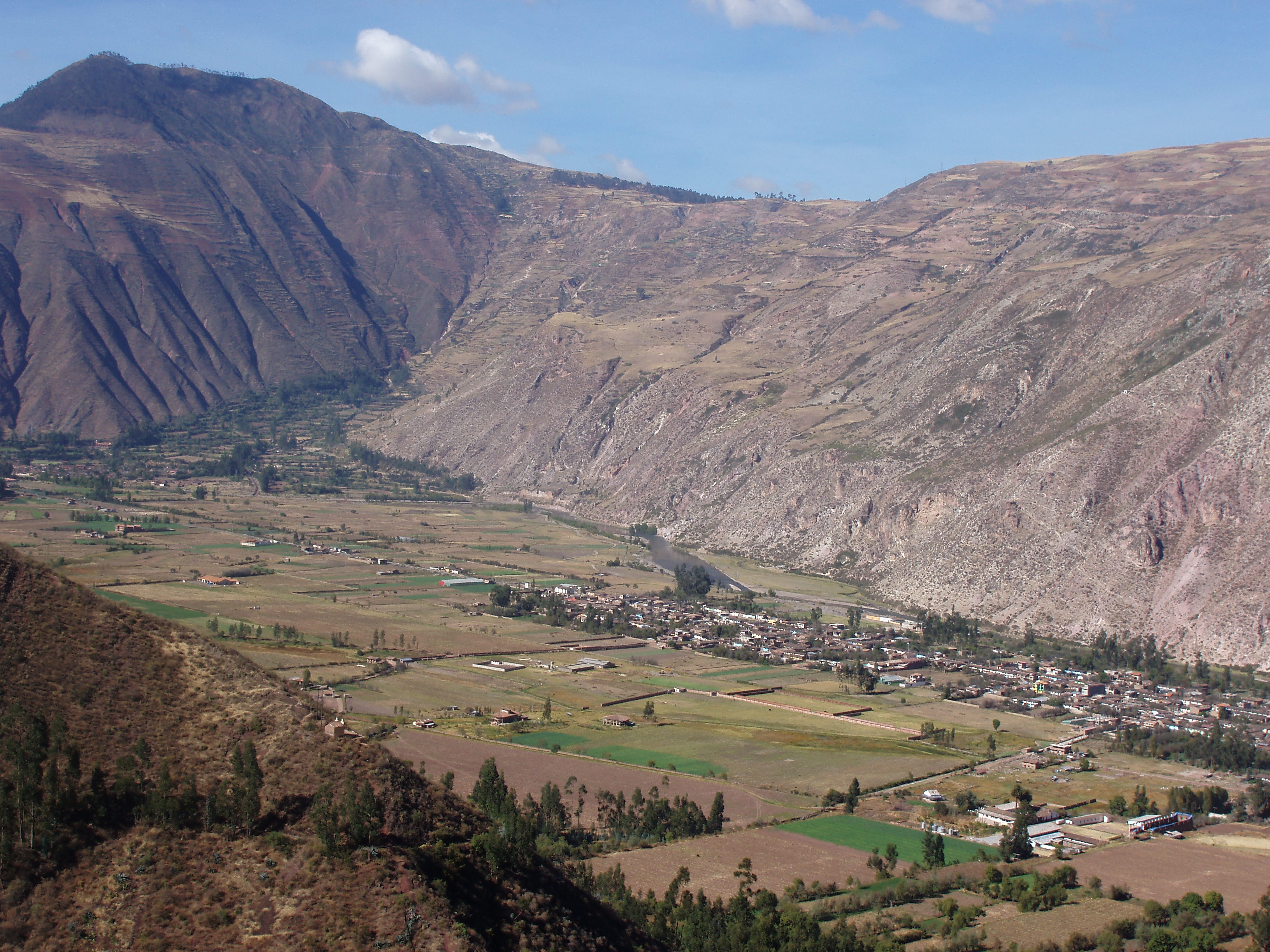
The morning I leave the Sacred Valley of the Incas, I take one long look at the mountains rising up around me and see our oneness. I realize that the incredible beauty of this mountain valley is my birthright because I am not separate from it. Here in the Andes or back at San Bruno Mountain near my home in California, I am part of the majestic and ever-expanding beauty of the universe.

Gracias a la vida!

Blessed be!

Machu Picchu and Inti Machai

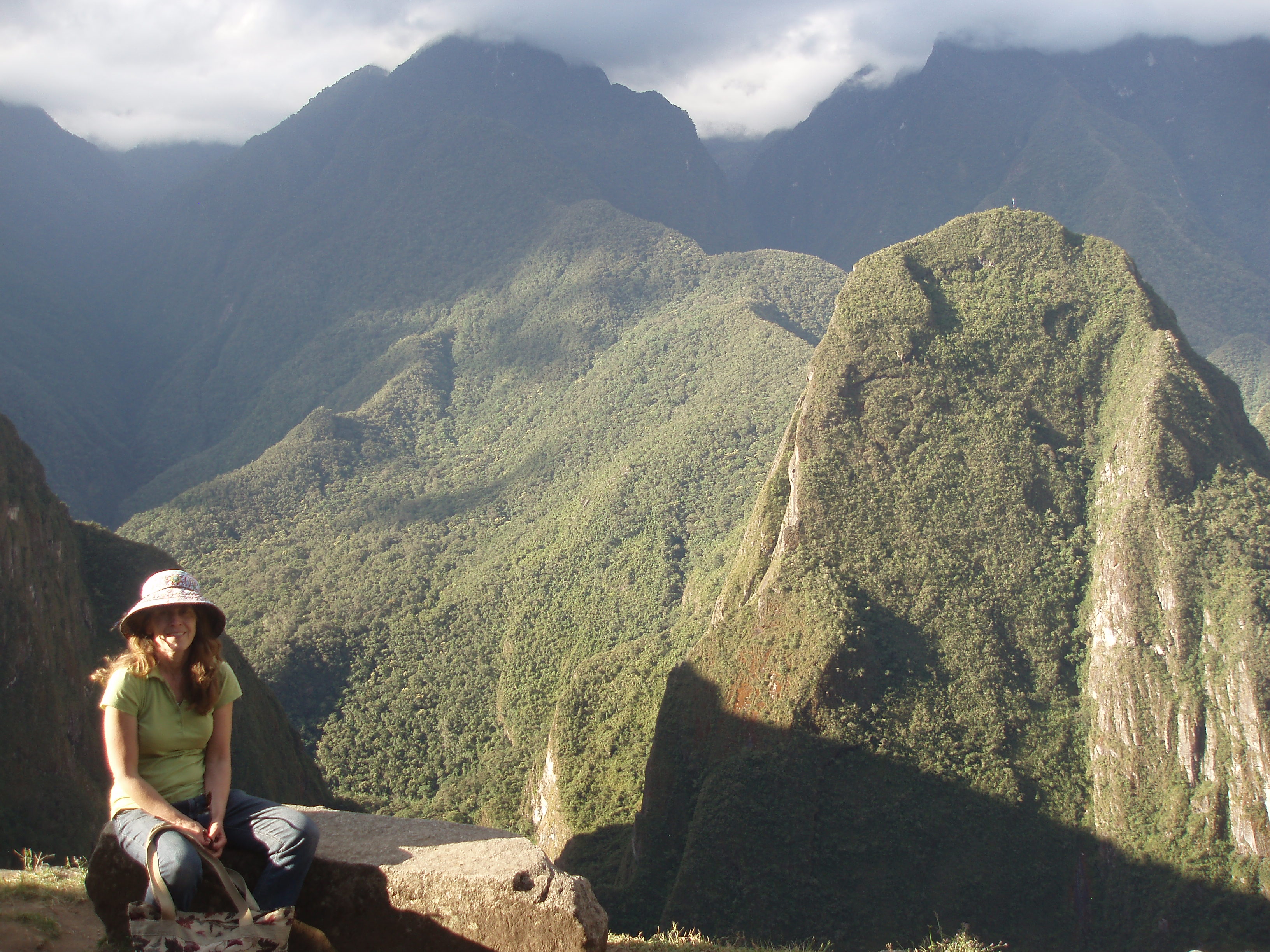
Temple City of Machu Picchu, Peru

Uncovered barely a hundred years ago, Machu Picchu was a temple city for the holy men and women of the Incan nobility, according to my guide. The Incas built their temples close to the sun, but caves were also important to them. Inti Machai is the cave I chose for meditation.

Inti Machai is like a tomb, an entrance into the heart of Pachamama, Earth Mother. After passing under slabs of granite, the same stone the Incas hewed for their temples and terraces, I found an altar and placed upon it my offering to Pachamama. Emerging from the cave-tomb, I felt like a newborn, both tender and strong. Sunlight and the green heights of El Cerro Feliz, the hill the people call Happy, greeted me. Words cannot express my gratitude, the immensity of my joy.

El Cerro Feliz

House tops (without roofs) and the mountain ranges

Cave of Inti Machai

June Solstice

We gathered before sunrise at the Puerta del Sol, an ancient Incan Sun Gate located a short walk from the Sacred Valley Retreat Center. For the ancient Incas, all life stemmed from the sun. They crafted their temples and other buildings with precise attention to the angle of the sun’s rays and the play of shadows. During the solstices, Inca initiates would place themselves at designated points where the first rays of the rising sun would illuminate their foreheads.

We followed this ritual at the Sun Gate in Yucay. I sat between rows of nubby stalks in a recently harvested cornfield. Before closing my eyes, I glimpsed the tomb-cliffs I had hiked to the day before. From there, my gaze traced Incan stone terraces and stone-lined irrigation channels all the way down to the stone steps of the Sun Gate. I closed my eyes to meditate. As the sun rose above the mountain, the first rays warmed my crown and then my forehead, and I felt tremendous power and gratitude welling up within me and swirling like the intense red patterns that played on my inner eye.

What a gift to allow myself to be here, I realized. What a gift to allow myself to live fully aware, dedicated to letting myself bloom. Here in this mountain valley, I could hear more clearly. Insights arose spontaneously, including:

  1. Honor the body and harbor the tender soul.

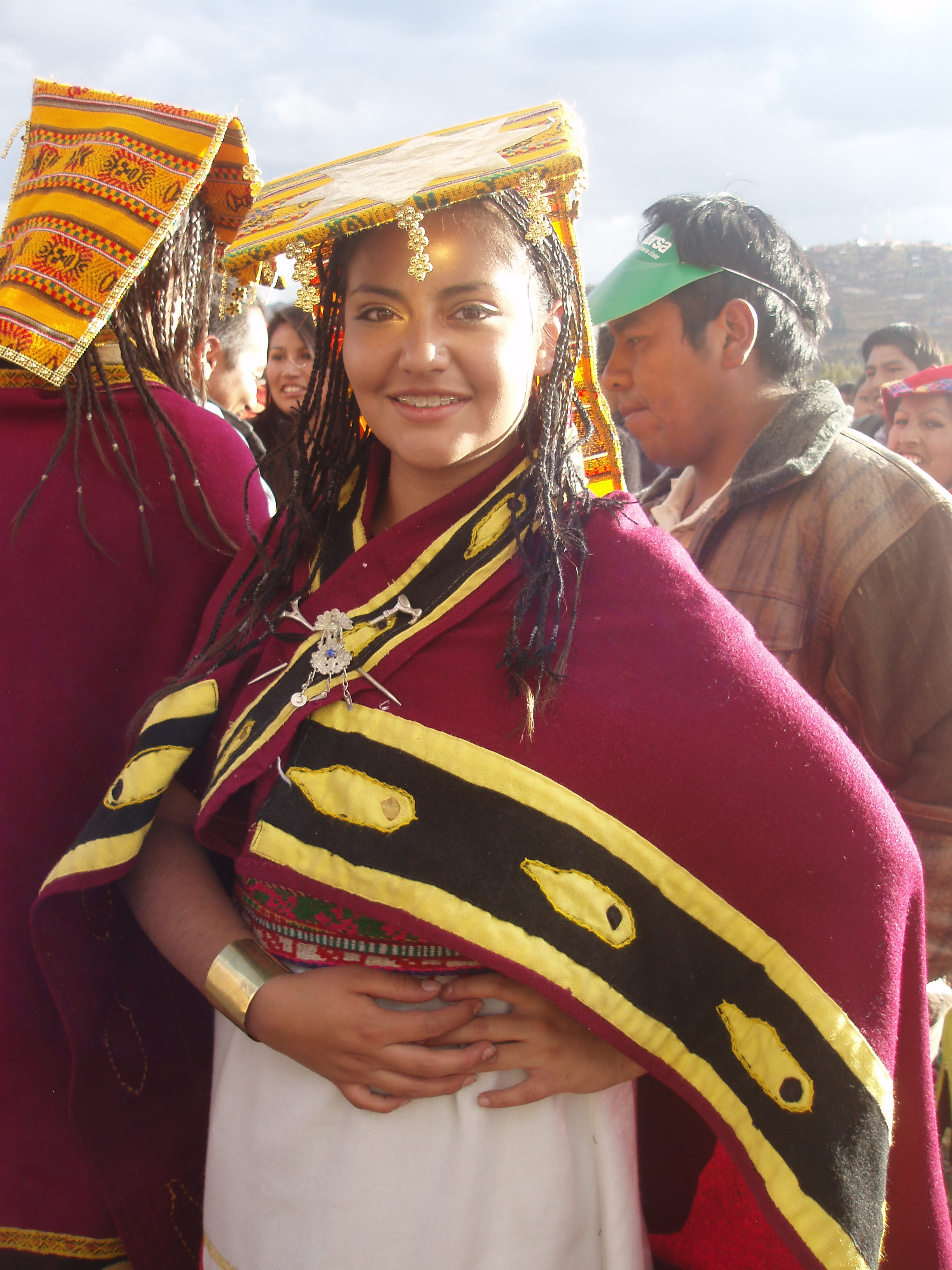
    Woman at the Inti Raymi celebration of the June Solstice

  2. Breathe into strength, the power deep within.
  3. Love openheartedly.
  4. Live in gratitude—great, great gratitude.
  5. Realize that death is a calm passing over, a sweetness not to be feared.

Back at the retreat center, I meditated for the remainder of the solstice day. By mid-afternoon, the garden and surrounding fields appeared to be both resting and abuzz with some hidden vigor and translucent sap. The poinsettia blazed red in the late afternoon sun. Off in the distance, a donkey brayed, a dog barked, and a chorus ensued. Beside me, the ewe tucked her legs beneath her woolly belly and chewed her cud.

All around me, shadows skirted the mountains, and I admired their bastion strength. Out loud I wondered how best to live my life.

The response:

  1. Live upturned like a daisy, heart open to the sun or the kiss of a child.
  2. Walk, every day, in the pulse of life. Walk with gratitude and awe, seeing the alive-ness and connectedness of everything.
  3. Meditate daily. Cultivate the inner richness.
  4. Every day, push the envelope of your courage. See what more emerges.
  5. Most of all, remember that you are part of this beauty. Remember your birthright to peace, abundance, and love.

Magnificence of the Andes

Camino a Las Tumbas/Path to the Tombs

On day 4 in the Andes, I hiked with Avishai* and two fellow travelers to the pre-Incan tombs that I could see from a trail near the farmhouse. From the distance, the round holes that punctuated the reddish swath of rock reminded me of the red cliff homes of the ancient Anasazi people of the U.S. Southwest. Our climb to the pre-Incan tombs was very steep, particular the last ascent, which was like scaling a cliff. As I pulled myself up by handfuls of thorny bushes, I told myself to not look down because I suddenly remembered I was afraid of heights.

When the four of us finally reached the rock shelf housing the three tombs, which were round and open-mouthed like red clay ovens, we sat in silence for a long while. There, next to the ancestors’ tombs and the cliff’s perilous edge, I reflected on fear and the need to befriend it.

As I rose to face the precipitous edge, Avishai counseled that faith and practice come from the same root word in Hebrew. Faith and practice cannot be separated. To have faith is to act on it, to walk. He encouraged me to trust my body and its intuitive ability to select the right footholds. And so I descended, trusting my body and befriending the gaping expanse.

Facing the edge, I now realize, was the best experience of the day. Too often the unknown is muddied by apprehension simply because we lack the ability to imagine it any other way.

View from the tombs.

At the tombs.

*Avishai and Viviana are my hosts and the proud proprietors of the Sacred Valley Retreat and Bed &Breakfast

Poem to the Mountain-Spirit Veronica

Poema al Apu Veronica (Poem to the Mountain-Spirit Veronica)

I am at peace here, with the mountains sloping down towards me in thick wooly pleats, olive green, majestic. Beside me sheep and llamas graze, and a kitten purrs beneath my tented knees. To the west rises Apu Veronica, with her white cap and shawl, como una reina: an earth queen standing tall, kissing sky.

Apu Veronica, I call to the white-capped mountain, you have blessed me so. What can I give in return?

The answer comes readily: love and know yourself so that you can truly attend to others.

The breeze lifts the hair from my face, and the kitten shakes her tiny paw, chasing critters in her dreams.

This entry was posted on July 11, 2012. 8 Comments

Stop! Rest! Birth!

Day 3

I dream that my car is overheating and the words shout at me: “Stop! Stop!” In the past I have often dreamed myself driving—an apt metaphor for someone who wishes to control her life and where it is going. But I am not in control; the Spirit is, if I can recognize and align myself with that divine force in my life. Here in the Sacred Valley I have stopped: I have ceased struggling, have come to rest. It is fitting that I arrived on Friday midday, just before Shabbat, the holy Sabbath. Today, all day is the Sabbath, a day of rest. Learning and seeking how to stop, how to allow for repair, for renewal and rejuvenation.

And so my journey begins with resting in this valley ringed by mountains. Into the portal I go, into the umbligo del mundo*, merging with the Pachamama, the earth mother who embraces me, who IS me.

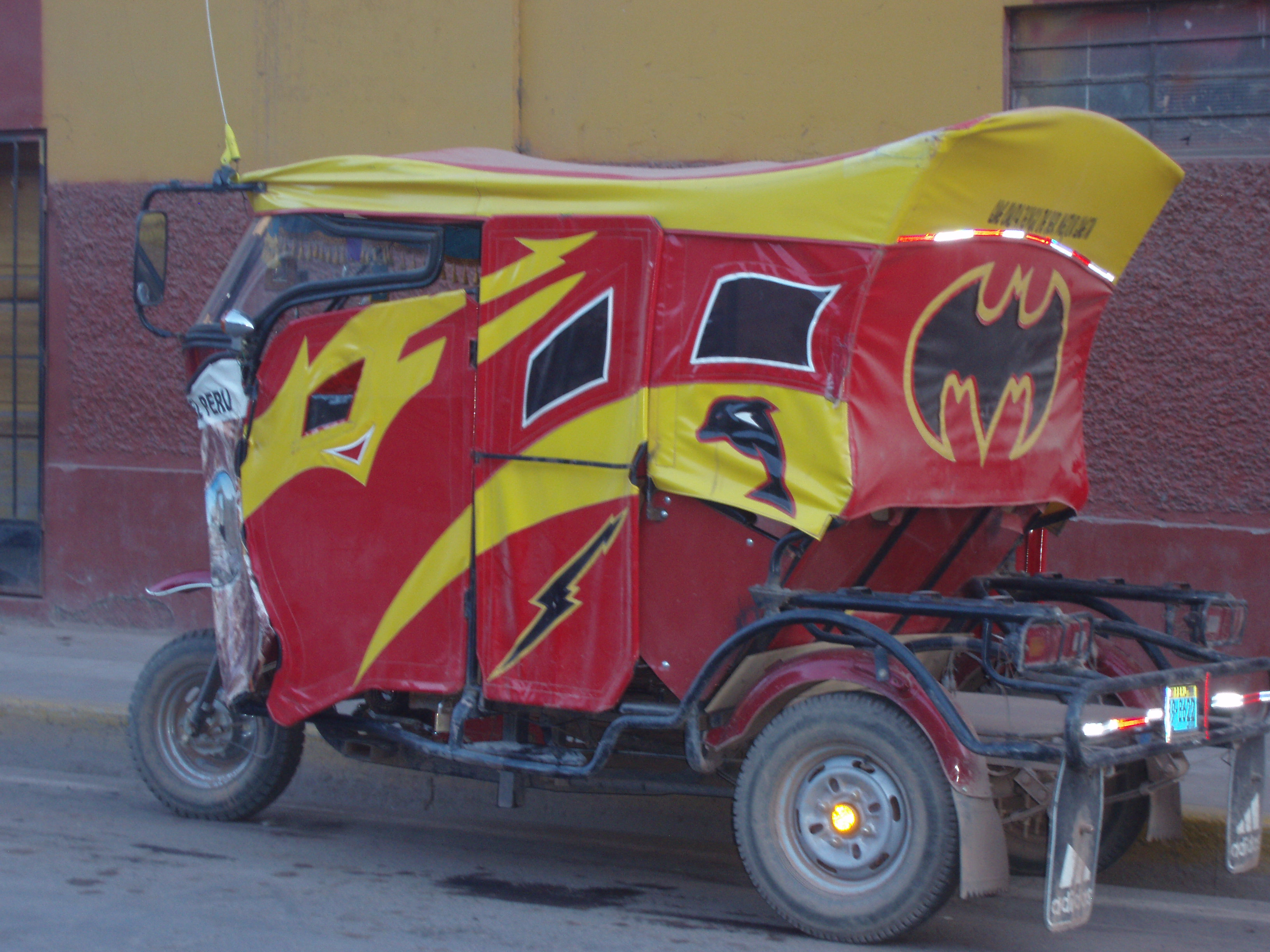
Motorcycle taxi stopped for a rest.

View of the garden just below my window at Sacred Valley B & B Retreat Center. The whole valley is ringed by mountains!

*The Incas referred to Cusco as el umbligo del mundo: the navel of the world.

The Spirit Leads to the Sacred Valley, Peru…

Day 1

After 36 of hours of travel – from San Francisco to San Salvador to San Jose  to Lima to Cusco—I finally land in the Sacred Valley of the Incas in the small village of Yucay, Peru.

Day 2

A path opens for me in my meditation. The path snakes ahead of me, inviting me to take it. It is opening, revealing itself, step by step. It is my path and no one else’s. I trust in the Divine within me and the Divine that IS me to find my way forward. This valley is sacred, and the paths within it lead to the Divine: divine healing and liberation, wholeness and health. It is enough to know that I am on the path.

View of Apu (Mountain-Spirit) Veronica from my bedroom window in Sacred Valley Retreat Center, Yucay, Peru

The War on Women and the Resurgence of the Divine Feminine

The debate over the power of government to regulate and control women’s reproductive abilities —just one aspect of the war on women — builds on a long history of women’s subjugation. Women’s ability to connect, conceive, and create life has always vexed those who aspire to dominate. Starting in the second millennium BC, women were blamed for the advent of sin and childbirth was condemned as divine punishment. For a period, men even claimed that their “seed” gave life, relegating women to the role of incubators for their offspring. Women were further denigrated during the Inquisition, when our sacred knowledge of plants and healing herbs was destroyed or driven underground, and our mothers’ mothers’ mothers’ bodies were raped, flogged, and burned.

Women, like the earth, have long been viewed as resources to be managed. Although this perception is expressed more subtly today than in previous centuries, it is the root of widespread domestic violence, sex trafficking, rape, and femicide.

At the same time, we are also experiencing a resurgence of the Divine Feminine. Receptivity, desire for connection, making room for another: These attributes describe women’s most fundamental ways of being in the world. We connect; we receive people with an attitude of nurture and collaboration; we work together. What happens when we begin to envision God this way, as open and connected?

Although marginalized in the Christian traditions, the Divine Feminine understanding of God exists. The Hebrew and Christian Bibles contain references to God as a nursing mother (Isaiah 49:15), a female bear (2 Samuel 17:8), a mother hen (Matthew 23:27), and Lady Wisdom (Proverbs 1:20-33). Other faith traditions place more emphasis on feminine qualities of the Divine.

You might ask if it matters. Does enlarging our understanding of the Divine have any real impact on our world and the war on women? I believe that when we are rooted in a more nurturing understanding of the Divine, we are empowered to love our deepest selves and release the destructive weapon of judgment, which we often wield first against ourselves and then against others. When we feel connected to a supportive, non-judging God, we can engage in power with, not power over or power against. By broadening our understanding of the Divine and our essential connectedness, we can forge new models of healing and collaboration. We can transform the dominant paradigm by changing it from the ground up.